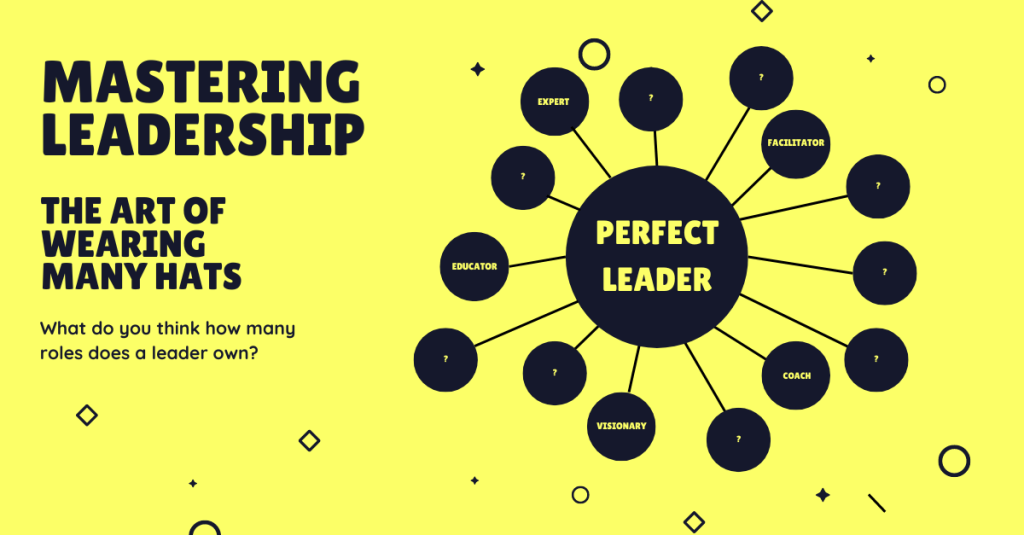
Leadership skills are one of the most mentioned topics on business platforms. Everybody has an opinion on what it takes to be a great leader. But is it that easy?
We will dive deep into the essence of leadership. Exploring the roles that define and distinguish effective leaders in today’s fast-paced world. Leadership is not a one-size-fits-all; it’s an art that requires wearing many hats. Each with its unique set of skills and responsibilities.
As we unfold the layers of each leadership role, my aim is to provide you with insights that inspires action and reflection. Let’s embark on this journey together.
The Visionary: Dreaming and Steering
The visionary leader is like a lighthouse. They provide guidance and direction in uncertainty. This role is about dreaming big, but it’s also about making those dreams attainable.
Visionary leaders have a unique blend of optimism and realism. Enabling them to craft visions that are both aspirational and achievable. They are storytellers, painting a picture of the future that excites and motivates.
- They are creating a sense of purpose that transcends daily tasks.
This role involves setting the direction and aligning the team’s efforts. It’s to achieve the collective goal. Visionary leaders foster an environment where innovation thrives and taking risks is normal. They encourage their teams to explore new horizons.
Their legacy is defined by the milestones reached and the trails blazed. They inspire future generations to dream even bigger. For example: Steve Jobs, Jeff Bezos and Elon Musk.
The Educator and Mentor: Nurturing and Guiding
Leaders transfer knowledge.
In their role of educators and mentors they shape the minds and hearts of their team members. They recognize that the growth of individuals is the cornerstone of organizational success.
They adopt a personalized approach to identify the unique needs and potential of each team member. They offer empowering and transformative guidance.
- This role extends beyond formal training sessions.
It’s about creating a culture of curiosity. Learning is continuous and embraced as part of the journey. Educator leaders are also lifelong learners.
They show humility and openness to new ideas. They invest time in mentorship. The growth and success of those they guide is a measurement for a leader’s legacy. Not only achievements.
The Expert and Advisor: Sharing Wisdom and Insight
The leader as an expert and advisor is a valuable asset. This role requires a deep reservoir of knowledge and experience. This becomes a guiding light for the organization.
- These leaders are sought after for their insights.
They are capable of dissecting complex problems and presenting innovative, practical solutions.
Their expertise is not kept in a silo. Instead, they share it. This fosters a culture where knowledge empowers and elevates the entire team.
Expert leaders also focus on staying ahead of industry trends. They ensure that their advice remains relevant and forward-thinking. Their commitment to excellence sets a high standard. It encourages others to pursue mastery in their own domains.
The Advocate: Speaking and Acting
The advocate leader stands at the forefront. He champions the needs and interests of their team or organization.
This role involves more than vocal support. It’s about taking actionable steps to secure resources, influence policy, and drive change. Advocates connect to their constituents, and understand their challenges and aspirations.
- They navigate complex political and social landscapes with tact and integrity.
Leaders build alliances that help progress. They advocate for an inclusive environment and value and hear every voice. Advocate leaders break down barriers and challenge the status quo. They ensure their organization is not just surviving, but thriving.
The Coach: Inspiring and Refining
The coaching role in leadership transcends the traditional boundaries of management. It’s about inspiring individuals to discover their own strengths and overcome their weaknesses.
Coaches provide continuous feedback. They listen and create dialogues that fosters self-awareness and personal growth. This role is highly individualized, recognizing that each team member’s journey is unique.
- Coaches set challenging but achievable goals.
They push their team to excel while providing the support and resources. Their approach is holistic. Coaches focus not just on professional development but also on personal well-being. The success of a coach is seen in the achievements of their team members. In the teams resilience, and in their capacity to grow and adapt.
The Facilitator: Connecting and Harmonizing
Facilitators excel in the art of coordination and collaboration. They create spaces where ideas can flow freely.
They encourage diverse perspectives. This leadership role is about guiding discussions. It ensures that discussions are productive and inclusive.
- Facilitators are adept at managing group dynamics.
They navigate conflicts, and foster an environment where consensus can be reached. Their skill lies in their ability to remain neutral. They provide structure and guidance without imposing their own views.
Facilitators ensure that decision-making processes are democratic and reflective of the collective wisdom of the team.
The Decision Maker: Judging and Acting
The weight of decision-making rests heavily on leaders. It requires a balance of intuition, analysis, and courage.
Decision-makers task themselves with steering the organization through both calm and turbulent waters. This role demands a comprehensive understanding of the business, and the potential impact of each decision.
- These leaders are not afraid to make tough calls.
They do so with consideration and empathy. They understand the ripple effects of their choices. They also foster a culture of accountability. They learn from their outcomes and stand by their decisions.
Effective decision-makers are transparent in their processes. They engage stakeholders and ensure that their decisions are informed and fair.
The Mediator: Balancing and Resolving
Conflict is an inevitable aspect of any dynamic organization. Mediators are essential for navigating these conflicts. They fairly and constructively resolve conflicts.
This role requires exceptional emotional intelligence. The ability to listen actively, and the skill to understand different perspectives.
- Mediators act as impartial parties.
They facilitate discussions that lead to mutual understanding and agreement. Their goal is to strengthen relationships and build trust among team members.
They promote a culture of open communication and respect. Mediators help maintain a harmonious and productive work environment.
The Change Agent: Transforming and Innovating
Change agents are the catalysts for transformation within organizations. They recognize the need for change. They have the vision and drive to lead their teams through the transition.
This role involves challenging the status quo. They encourage innovation and manage the resistance that comes with change.
- Change agents are strategic thinkers.
They plan meticulously. They remain flexible and responsive to feedback. Their leadership is characterized by resilience. They inspire others to embrace change.
They see the opportunities it presents. Change agents guide their organizations through transformation. They also cultivate a culture. This culture is agile, adaptable, and prepared for the future.
The Motivator: Energizing and Encouraging
Motivation is the fuel that drives teams towards their goals. Leaders in the motivator role excel in creating an environment. Individuals feel valued, engaged, and inspired.
They understand the power of recognition. Celebrating both individual and collective achievements is part of their leadership.
- Motivators identify and address the factors that may demoralize or hinder performance.
They ensure that their team remains focused and motivated. Their energy and enthusiasm are contagious. They foster a positive and dynamic work culture.
Motivators prioritize their team’s well-being and satisfaction. This enhances productivity and builds loyalty and a strong sense of community.
The Strategist: Planning and Executing
The strategist role is crucial in business. It helps navigate challenges and seize opportunities. Strategists have a long-term vision.
With the analytical skills they map out the path to success. They are forward-thinking. They anticipate future trends and prepare their organization to meet them head-on.
- This role involves execution.
It ensures that strategies translate into actionable steps that drive progress. Strategists are flexible. They adapt their plans based on new information and changing circumstances.
Their leadership ensures that the organization thrives. It remains competitive and innovative in a global market.
The Role Model: Exemplifying and Influencing
Leadership is as much about who you are as what you do. Role models in leadership positions set the standard for ethics, integrity, and professionalism. They lead by example.
They show the values and behaviors they wish to see in their organization. This role is about inspiring trust and admiration. It influences the organizational culture in profound ways.
- Role models understand the impact of their actions.
They strive to be the best version of themselves for the benefit of their team and organization. Their legacy reflects in the positive behaviors and attitudes of those they lead. They foster an environment where excellence is the norm.
The Communicator: Informing and Connecting
Effective communication is the lifeblood of leadership. Communicators excel in articulating ideas. They share information, and foster an environment of transparency and trust.
This role involves listening as much as speaking. It ensures that all voices are heard and considered.
- Communicators are skilled at adapting their message to different audiences.
They ensure clarity and understanding. They recognize the power of communication in building relationships. They also recognize its power in resolving conflicts and driving organizational success.
Through open and honest dialogue they bridge gaps. They align efforts and create a cohesive and collaborative team.
The Risk Taker: Innovating and Leading
Innovation requires stepping into the unknown. Leaders who embrace risk-taking are often at the forefront of breakthroughs.
These leaders assess opportunities carefully, weighing the potential benefits against the risks. Their willingness to venture into uncharted territory inspires a culture of innovation. It also encourages experimentation.
- Risk-takers are resilient.
They learn from setbacks and use them as stepping stones to success. Their boldness and creativity drive progress. They also encourage their team to think outside the box and pursue new ideas.
Risk-takers ensure that their organizations remain adaptive and forward-thinking.
Let’s conclude our exploration of the diverse roles of leadership.
It’s clear that effective leadership is not about occupying a position of power. It’s about the impact one can make through various roles. Each role offers a unique set of challenges and opportunities.
Mastering them requires adaptability, empathy, and a commitment to continuous learning. By embracing these roles, leaders can inspire their teams. They can drive change and achieve lasting success.
I hope this deep dive into the roles of leadership has given you valuable insights. It may also have inspired you. Share this knowledge with peers and colleagues. Let’s strive together to elevate our leadership practices.
Thank you for joining me on this journey. Remember, the path to great leadership is one of constant learning and growth.
Leaders at Amazon follow 16 special rules that help them be good leaders in many ways. These rules make them focus on important things like really caring about customers, always learning, coming up with new ideas, and being trusted by others.
For example, they really care about what customers need, just like an advocate does. They also love to learn new things, like a educator. They are good at making new things and keeping things simple, which is what someone who likes change does.
They also make sure people can trust them and they pay close attention to the small details, just like a good advisor. By using these rules, Amazon’s leaders are able to lead in a way that is smart and helps everyone do their best.
They don’t just tell people what to do; they inspire and teach them to reach for great things.
Steven Bartlett presents a compelling leadership vision on YouTube. He delineates his approach to cultivating an environment where every employee embodies leadership.
This approach is a testament to the belief that effective leadership goes beyond hierarchies. It highlights the significance of inspiring and exemplifying leadership qualities in everyday actions and interactions.
Bartlett champions a dynamic and inclusive approach. It fosters a culture where leadership is a shared responsibility. He ensures that leadership is not confined to a select few. Instead, it is a collective endeavor that drives the organization forward.
His insights offer a practical blueprint for embedding leadership at all levels.
 The Value-Matrix
Leave a comment